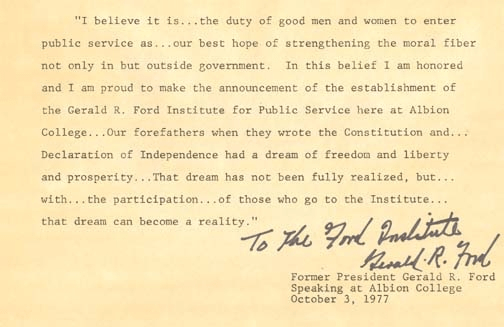
Albion College’s Gerald R. Ford Institute for Leadership in Public Policy and Service is more than an academic program: it’s a bridge between a liberal-arts campus and the civic, nonprofit, and governmental life of the city of Albion. Through internships, volunteer programs, and community-facing projects, the Institute channels student energy, training, and resources into local institutions and neighborhoods; strengthening civic capacity while giving students real, resume-worthy experience.
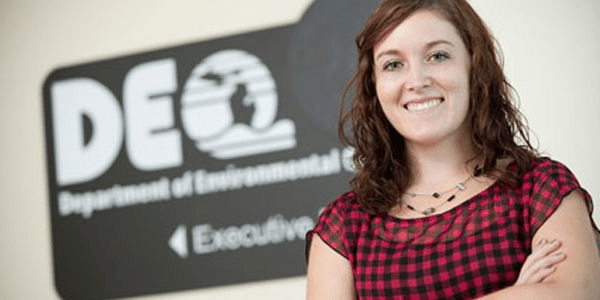
Hands-on internships that meet local needs
One of the Ford Institute’s core offerings is individualized internship placement. Students work in federal, state and local government offices, nonprofit organizations, and community agencies; placements that range from Washington, D.C., policy internships to roles with mayors’ offices, city managers, and grassroots organizations closer to home. The Institute’s staff help match students to hosts so that learning goals and community needs align. For the city of Albion this means an influx of motivated, supervised students tackling projects the municipality or local nonprofits may not otherwise have bandwidth for; from policy research and program evaluation to communications, data work, and constituent services.
Those internships produce mutual benefits: students gain practical skills and networks; local partners get skilled work in short-term capacity; and the community builds a pipeline of civic-minded young professionals who may stay or return as alumni. The Ford Institute’s internship structure, which includes federal, state, local, nonprofit, and other sector placements, makes that pipeline intentionally broad.
Volunteering and national service: boots on the ground
Beyond credit-bearing internships, Ford Institute students participate in structured volunteer programs and service corps. Albion runs Community Corps as an inclusive volunteer initiative and administers AmeriCorps-linked programming that allows students to serve in ways that build local capacity (volunteer recruitment, program design, direct service, training materials, and more). Those programs translate into measurable, on-the-ground assistance for local food banks, schools, youth programs, health initiatives, and neighborhood improvement efforts.
Because participation is organized (formal tracking, reflection, and sometimes academic credit), volunteers often deliver sustained value rather than one-off events. Sectors that benefit most are typically human services, civic engagement projects, and local government offices that welcome help with outreach, data entry, program design, and evaluation.
Community recognition and reciprocal partnerships
The Ford Institute emphasizes partnerships rather than one-way service. Capstone projects, senior BAF (Bachelor of Arts in Ford) projects, and fellows programs (such as leadership fellows) are structured to produce deliverables that the city or nonprofit can continue to use. The Institute also keeps a community service log and public inventory of student service, which helps the college and community recognize contributions and identify ongoing needs. Those practices make it easier for local leaders to publicly recognize students and for the college to showcase community impact in alumni and donor communications.
Recognition comes in other forms, too: local proclamations, media coverage of collaborative projects, and opportunities for students to present findings to municipal boards or nonprofit steering committees. Those public moments strengthen town-gown relations, build civic pride, and give students real practice communicating with community stakeholders.
Why the city of Albion benefits, and how impact deepens
The Institute’s activity produces multiple downstream effects for Albion:
- Capacity and expertise: Small city governments and nonprofits often lack staff for research, grant writing, evaluation, or outreach; interns and AmeriCorps members provide short-term capacity that can unlock new funding or improve program delivery.
- Civic engagement: The Institute’s curriculum and service requirements foster civic habits that persist beyond college; volunteers become informed voters, nonprofit board members, or local employees.
- Community-centered problem solving: Senior projects and capstones, co-designed with local partners; produce practical tools (reports, training curricula, outreach plans) that local groups can adopt.
- Talent pipeline: Students who develop positive ties to local leaders and organizations are more likely to remain in the region after graduation, contributing to economic and social renewal.
Opportunities and considerations for growth
To deepen impact, colleges and cities can formalize metrics (hours served, projects completed, post-internship retention in the community) and co-create multi-year placements that address structural issues (affordable housing, workforce development, public health). Continuing to treat community partners as equal collaborators, compensating organizations for supervision time, sharing data, and co-publishing results, will sustain trust and improve outcomes. The Ford Institute already models many of these practices via its structured internships, Community Corps, and AmeriCorps ties.
Conclusion – a two-way street
Albion College’s Ford Institute exemplifies how higher education can be woven into the civic fabric of a small city. By combining coursework, individualized internships, service corps, and community-aligned capstones, the Institute delivers practical help to Albion while training students to lead in public life. When colleges treat local partners as collaborators and invest in sustained service pathways, both the community and students prosper, Albion’s experience with the Ford Institute is a clear demonstration of that reciprocal value.

 Albion Life Today